

Swahili live captions and productivity tool for doctor appointments
For deaf and hard of hearing people.
Download for free
Everything you need to follow Swahili doctor appointments
Four tools built for deaf and hard of hearing Swahili speakers.
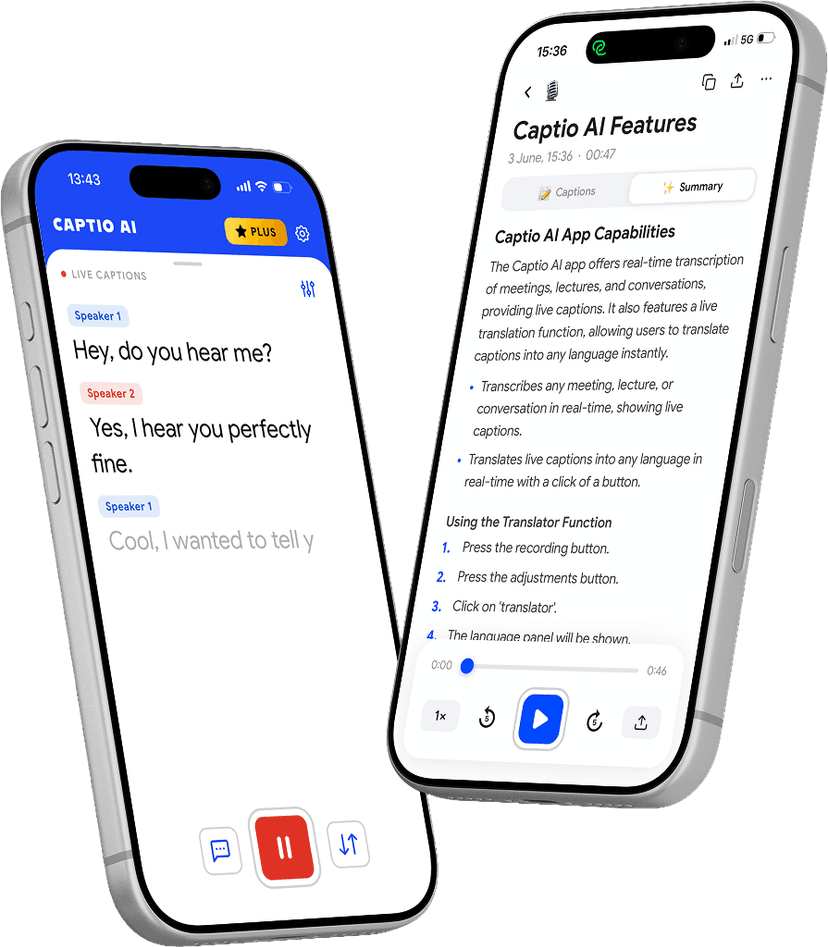
Follow what the doctor says in real time
- Captions appear word by word as they speak
- Handles medical terminology, drug names, and clinical language
- Place the phone on the desk — no setup needed
- Works in any consultation room, clinic, or hospital setting
When the doctor speaks another language
- Captions and translates in real time
- Follow your diagnosis in the language you understand best
- 60+ languages, no manual switching
- For foreign specialists, travel, or immigration settings
A full record of the consultation
- Record the appointment and upload it for a complete transcript
- Review instructions, drug names, and follow-up steps at home
- Share with a family member or carer if needed
- Works on any consultation recording
Key instructions extracted automatically
- Diagnosis, medication, and follow-up steps pulled from any transcript
- Organised into clear sections
- Nothing important missed or forgotten
- Works on any saved appointment recording
Download for free
Every situation covered
Designed for the real moments that matter — not just quiet controlled environments.
Government hospital outpatient visits in Kenya or Tanzania, where queues are long and consultation time is short — a doctor delivering a diagnosis in rapid Swahili with no time for repetition.
Community health clinic consultations (dispensary visits), where the health worker may speak mixed Swahili and a local language in the same sentence.
Pharmacy counter conversations at a duka la dawa, where dosage instructions are given verbally and quickly to the next patient in line.
Dental appointments in an urban clinic, where the dentist is masked and the patient cannot turn to lip-read during treatment.
Maternal and child health clinic visits (MCH), where mothers and caregivers receive instructions about medication and follow-up care in Swahili.
Emergency room or casualty visits at a referral hospital, where staff communicate rapidly and the environment is loud and chaotic.
Most accurate and fastest models
word accuracy
independent benchmark, 2025
real-time captions
first word appears as you speak
Download for free
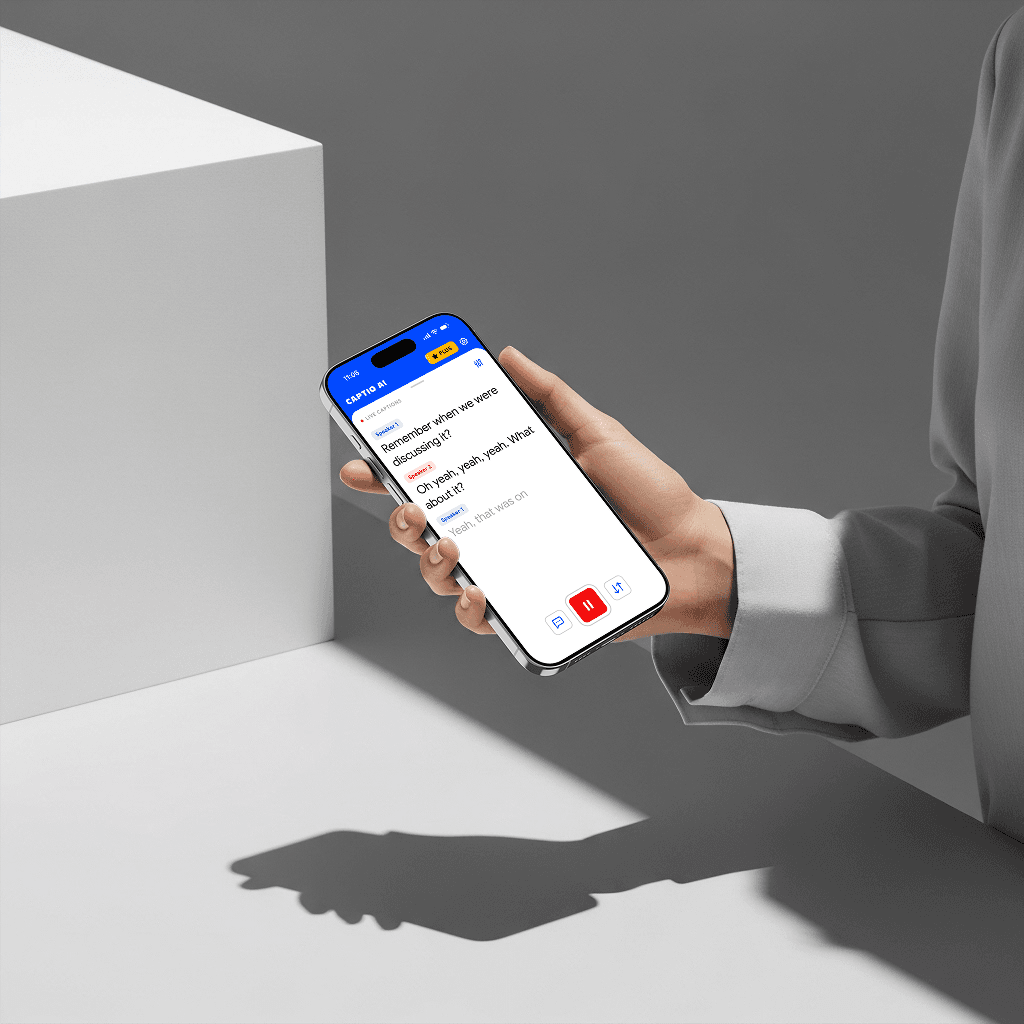
Built for the conversations where every word matters
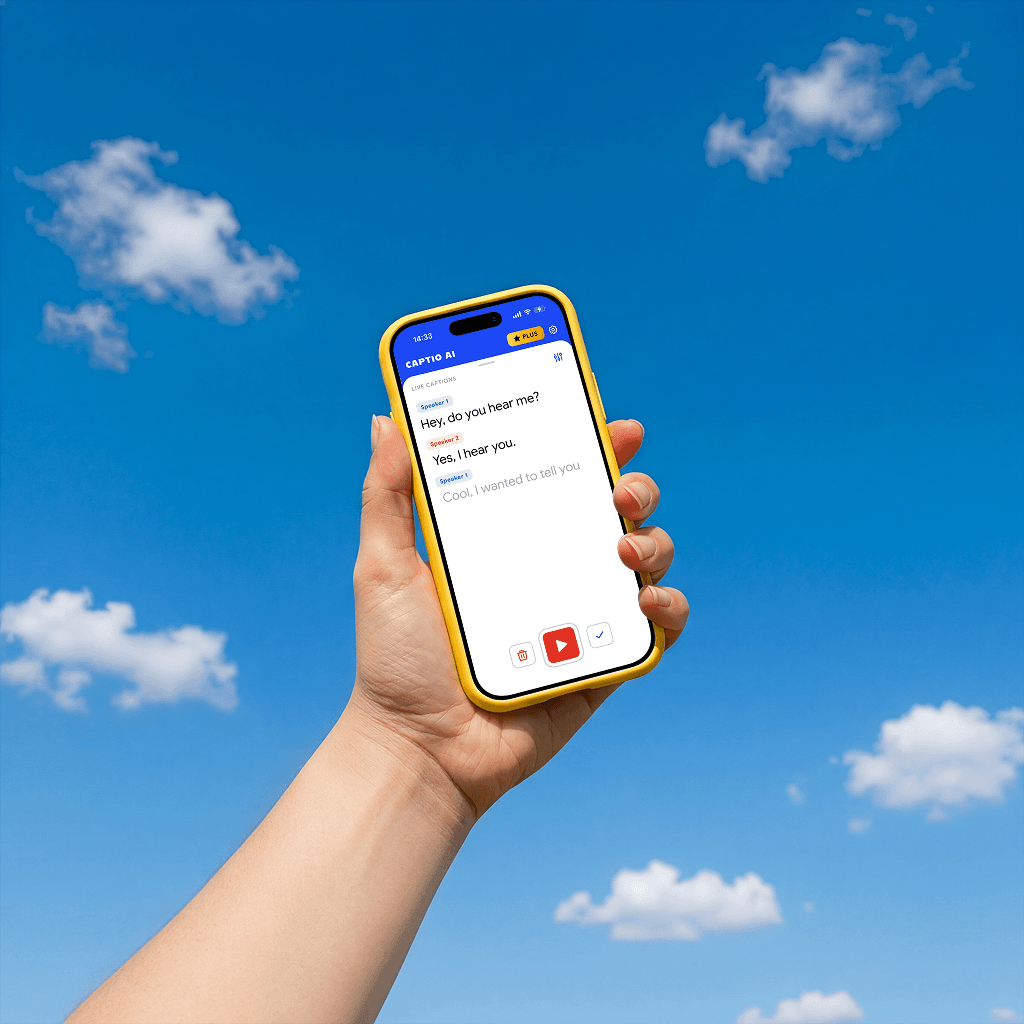
Captions as the doctor speaks
Words appear on screen while the doctor is still talking. You read the diagnosis, drug name, or follow-up instruction at the same moment it is said — not after they have moved on.
Medical terminology handled accurately
Drug names, procedure names, clinical terms. Captio AI handles the vocabulary of a real consultation — not just everyday speech.
Review the appointment after
Record the consultation and upload it to Audio Transcription. Get a full written record of everything said — instructions, dosages, referrals — to review at home and share with a carer if needed.
Works in any clinical setting
Consultation rooms, hospital wards, A&E, dental chairs, pharmacy counters. Place the phone near the speaker and Captio AI captions whoever is talking.
Any language
For foreign-language doctors, specialists abroad, or appointments through an interpreter. Live Translator captions and translates in real time so you follow your diagnosis in the language you understand best.
100% private
Medical conversations are among the most sensitive there are. Captio AI processes audio in real time and discards it immediately. Nothing is recorded, stored, or shared.
Why Swahili is hard to understand
Prenasalized stops
- Swahili has sounds that begin inside the mouth
- Swahili uses prenasalized consonants — sounds like /ⁿd/, /ᵐb/, /ⁿg/ — where the nasal component begins before the lips move. A deaf or hard of hearing patient watching a doctor's face sees only the second half of these sounds, making the beginning of many clinical words ambiguous.
Syllabic nasals
- Words can start with invisible sounds
- Many Swahili words begin with a syllabic nasal — ng', ny, m, n — that produces no visible lip movement. Common words a patient might hear at a clinic, like ndio (yes) or ng'ombe (cattle, in rural health discussions), start with sounds that are completely invisible on the lips.
Swahili–English code-switch
- Medical terms switch unexpectedly to English
- In East African clinical settings, doctors and nurses frequently insert English medical terms into Swahili sentences — 'blood pressure', 'injection', 'CT scan' — without warning. A deaf patient trying to follow Swahili speech is suddenly presented with English words in a different mouth shape and rhythm.
Regional dialect variation
- Coastal, mainland, and Tanzanian Swahili differ
- Standard Swahili is based on Unguja (Zanzibar) Swahili, but clinical settings in Mombasa, Nairobi, Dar es Salaam, and inland regions all reflect local phonological variation. The consonant realization and vowel quality shift between coastal and mainland speech in ways that create additional ambiguity for a lip-reader.
Homophone density
- Many Swahili words look identical on the lips
- Swahili's simple CV syllable structure (consonant-vowel) means many short clinical words share the same visible mouth movements. Without hearing the difference, distinctions that matter clinically — between similar-looking verb forms that indicate negation or tense — are lost on the lips alone.
Download for free
40 million Africans with hearing loss. One ENT surgeon per million people.
Sub-Saharan Africa faces a hearing loss crisis that receives little international attention. Forty million Africans currently live with hearing loss, and without intervention this figure is projected to reach 54 million by 2030 and 97 million by 2050. In East Africa — Kenya, Tanzania, Uganda — the shortage of audiologists and ear, nose and throat specialists is extreme. In 56% of African countries, there is only one ENT surgeon per million people, compared to more than 50 per million in most European countries. Hearing loss screening does not exist at scale in either Kenya or Tanzania.
Kenya's National Health Mission has identified hearing loss as a significant unchecked public health burden, but routine audiological screening has not been integrated into primary care. In Tanzania, a 2019 study of primary school children in the Kilimanjaro region found hearing impairment prevalence high enough to warrant systematic intervention, yet no national programme exists. The result is that the majority of deaf and hard of hearing people in East Africa navigate the healthcare system — clinics, pharmacies, hospitals — without communication support of any kind. Sign language interpreters in clinical settings are almost entirely absent.
The broader African context makes the individual consultation a moment of compounded disadvantage. Africa loses an estimated $27.1 billion annually due to the economic impact of unaddressed hearing impairment. Deaf and hard of hearing people in Kenya and Tanzania who cannot follow medical instructions are more likely to misuse medication, miss follow-up appointments, and receive delayed diagnoses — costs that fall hardest on individuals with the fewest resources.
Download for free
What you hear stays with you.
Gone the moment it ends
Captio AI processes your audio in real time and discards it immediately. Nothing is recorded. Nothing is kept.
Not a product
Your conversations are not something Captio AI sells, shares, or monetizes — to anyone, for any reason.
Not used to train anything
What you say in a doctor's appointment or a job interview never ends up in a training dataset. Not ours. Not anyone else's.
Private by default
Captio AI supports 60+ languages
Download for free
Frequently asked questions
Understand your diagnosis in Swahili.
Captio AI is free to start
Download for free