

Belarusian live captions and productivity tool for doctor appointments
For deaf and hard of hearing people.
Download for free


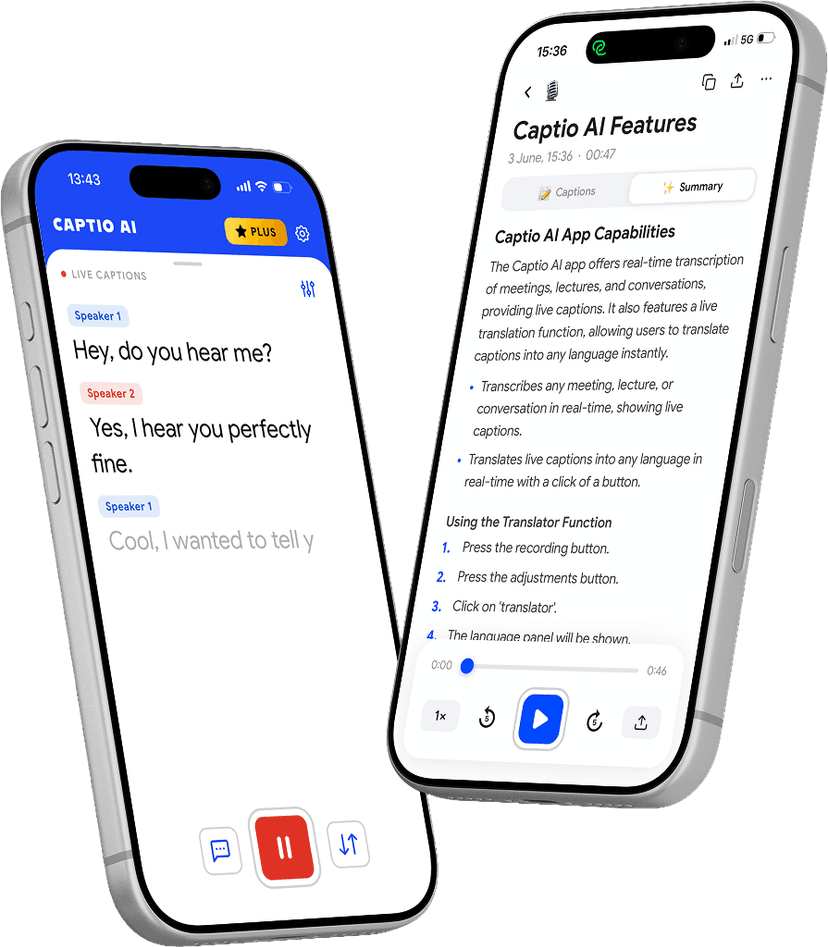
Everything you need to follow Belarusian doctor appointments
Four tools built for deaf and hard of hearing Belarusian speakers.
Follow what the doctor says in real time
- Captions appear word by word as they speak
- Handles medical terminology, drug names, and clinical language
- Place the phone on the desk — no setup needed
- Works in any consultation room, clinic, or hospital setting
When the doctor speaks another language
- Captions and translates in real time
- Follow your diagnosis in the language you understand best
- 60+ languages, no manual switching
- For foreign specialists, travel, or immigration settings
A full record of the consultation
- Record the appointment and upload it for a complete transcript
- Review instructions, drug names, and follow-up steps at home
- Share with a family member or carer if needed
- Works on any consultation recording
Key instructions extracted automatically
- Diagnosis, medication, and follow-up steps pulled from any transcript
- Organised into clear sections
- Nothing important missed or forgotten
- Works on any saved appointment recording
Download for free
Every situation covered
Designed for the real moments that matter — not just quiet controlled environments.
At a palіklіnіka (polyclinic) in Minsk, Hrodna, or a regional town, your doctor conducts the appointment in Russian or Belarusian. Captio AI captions both languages in real time so you follow without missing critical details.
At a specialist consultation at a rеspublіkanskaya klinіcheskaya balnіtsa (republican clinical hospital), medical terms arrive in Russian. Captio AI captions in real time.
At the apteka (pharmacy), the pharmacist explains dosage and interactions quickly in Russian or Belarusian. Point your phone toward them and read the instructions as they speak.
At the zubnoy vracha (dental surgery), the dentist gives instructions during treatment when lip-reading is impossible. Captio AI captions from audio alone.
In a session with a psіkhіatar or psіkholag, sensitive conversations require full comprehension. Captio AI captions the full session so you engage without missing context.
At the skarava medytsynskaya pomashch (emergency room), staff speak quickly under pressure. Open Captio AI and read their instructions as they arrive.
Most accurate and fastest models
word accuracy
independent benchmark, 2025
real-time captions
first word appears as you speak
Download for free
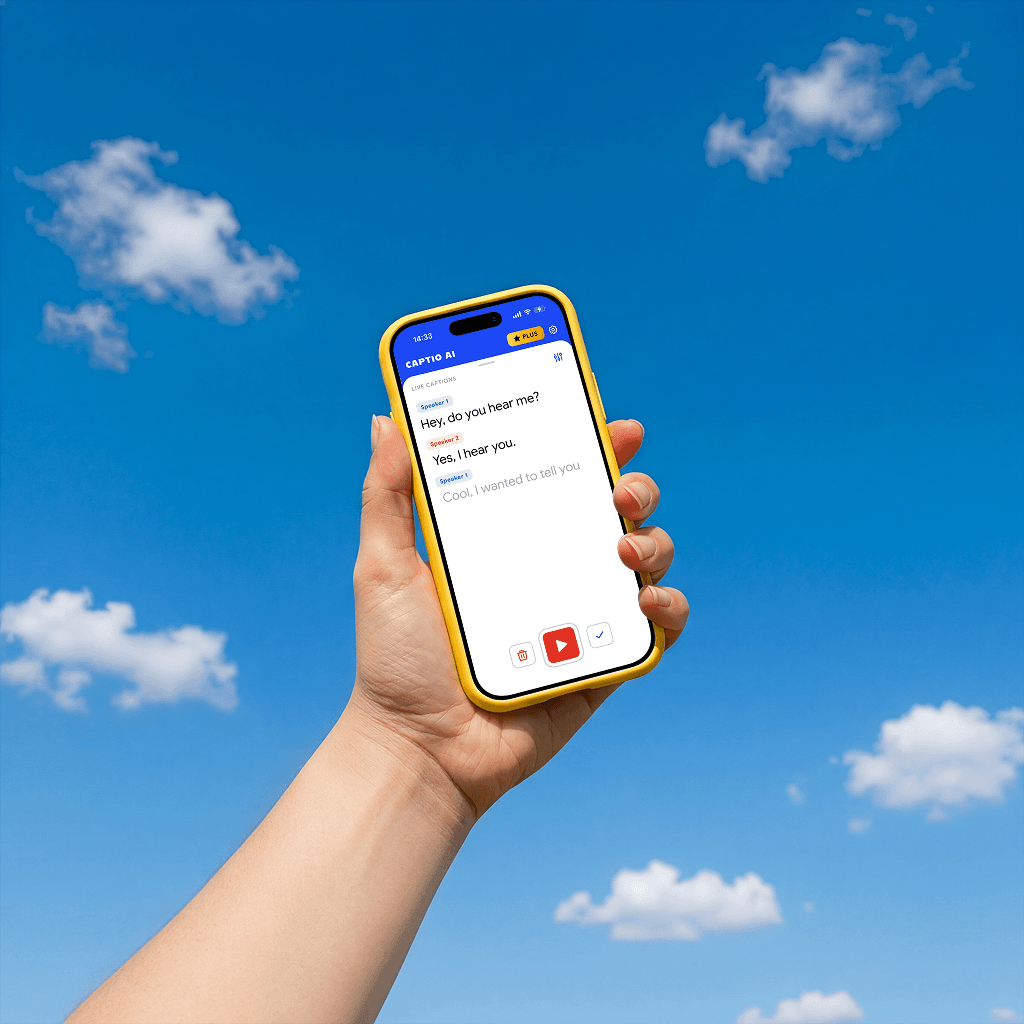
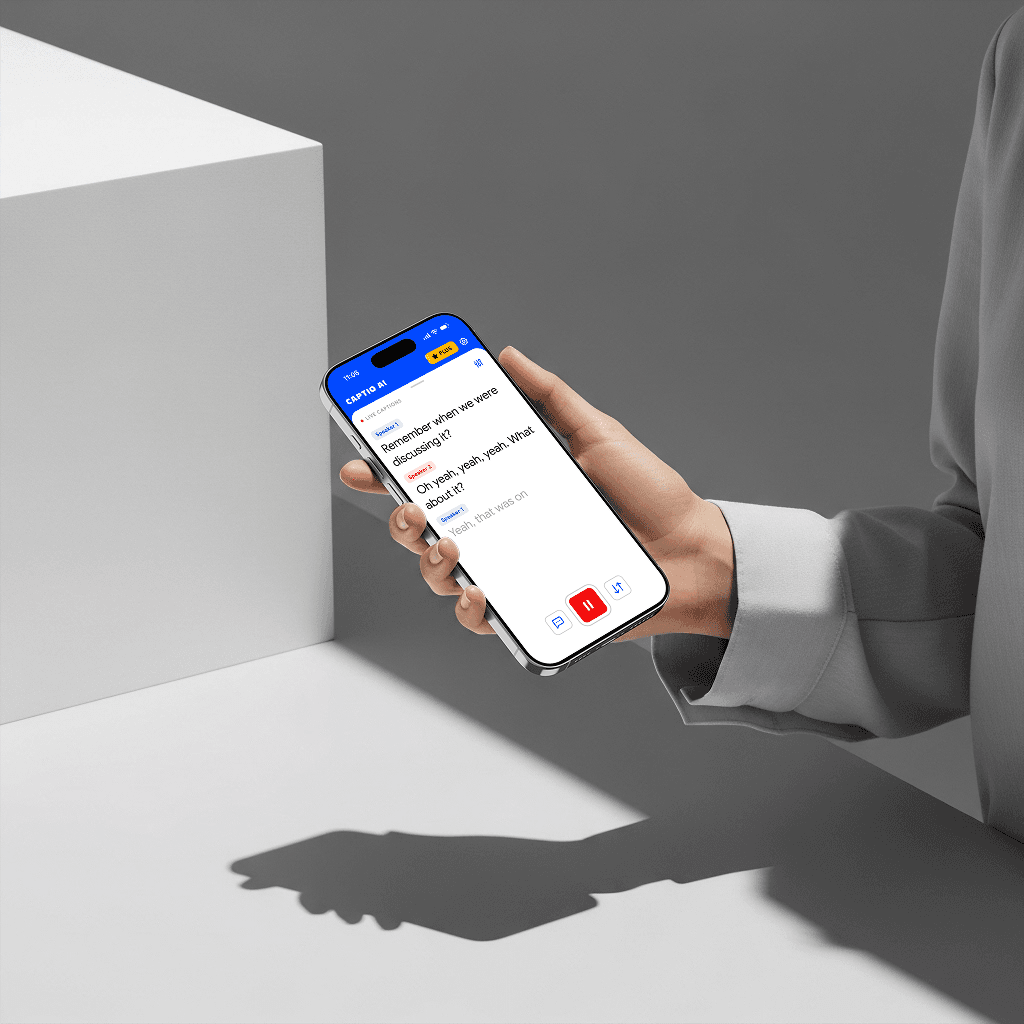
Built for the conversations where every word matters
Captions as the doctor speaks
Words appear on screen while the doctor is still talking. You read the diagnosis, drug name, or follow-up instruction at the same moment it is said — not after they have moved on.
Medical terminology handled accurately
Drug names, procedure names, clinical terms. Captio AI handles the vocabulary of a real consultation — not just everyday speech.
Review the appointment after
Record the consultation and upload it to Audio Transcription. Get a full written record of everything said — instructions, dosages, referrals — to review at home and share with a carer if needed.
Works in any clinical setting
Consultation rooms, hospital wards, A&E, dental chairs, pharmacy counters. Place the phone near the speaker and Captio AI captions whoever is talking.
Any language
For foreign-language doctors, specialists abroad, or appointments through an interpreter. Live Translator captions and translates in real time so you follow your diagnosis in the language you understand best.
100% private
Medical conversations are among the most sensitive there are. Captio AI processes audio in real time and discards it immediately. Nothing is recorded, stored, or shared.
Why Belarusian is hard to understand
Russian dominance in healthcare
- Belarusian healthcare runs in Russian — a different language on the lips
- Despite Belarusian being a co-official language, Russian is the dominant language in Belarusian healthcare settings — on prescriptions, in clinical documentation, and in most doctor-patient conversations in cities. A deaf or hard of hearing patient who lip-reads Belarusian attends appointments where the doctor speaks Russian, creating a systematic language mismatch between the patient's lip-reading training and the clinical language being used.
Dzekanie and tsekanie
- Belarusian consonant softening creates sounds absent in Russian or Polish
- Belarusian has two distinctive phonological features — dzekanie (realisation of /d/ before front vowels as /dz/) and tsekanie (realisation of /t/ before front vowels as /ts/). These produce consonant sounds like 'dz' and 'ts' where Russian speakers would use plain 'd' and 't'. For a deaf patient lip-reading a Belarusian-speaking healthcare worker — in a setting where Belarusian is used at all — these consonant shifts produce different lip shapes from what they would see in the related Russian or Polish they might also know.
Mask-wearing impact
- Masks in healthcare eliminated the one visual cue Belarusian deaf patients had
- WHO documented that during the COVID-19 pandemic, deaf Belarusians found mask-wearing in healthcare settings — already their primary site of communication difficulty — catastrophic for lip-reading. The WHO Country Office in Belarus trialled a tablet-based sign-to-speech translation service in 2021 specifically because mask mandates had removed the visual lip movement that many deaf Belarusians relied on as their primary compensation for hearing loss. This documented crisis illustrated how thin the safety margin was in ordinary times.
Trasianka code-mixing
- Trasianka mixes Belarusian and Russian in ways that confuse clear segmentation
- Many Belarusian speakers use Trasianka — a mixed colloquial variety combining Belarusian and Russian grammar and vocabulary in variable proportions. In healthcare contexts outside major cities, a doctor may speak Trasianka rather than pure Russian or pure Belarusian. For a deaf patient lip-reading, the phonological unpredictability of Trasianka — which language's sound patterns are active right now? — removes the linguistic anchoring that makes lip-reading even partially effective.
Sign language not recognised
- Belarusian Sign Language lacks official legal recognition
- Belarusian Sign Language is not officially recognised by the state. Deaf Belarusians navigating healthcare, education, and public services do so without legal entitlement to sign language interpretation. In clinical settings, this means communication support is discretionary rather than guaranteed — dependent on the goodwill and resources of individual facilities rather than a legal right the patient can invoke.
Download for free
Hearing loss in Belarus: masks, tablets, and a system that needed emergency solutions
Belarus has an estimated 10,000 hearing-impaired people according to WHO figures, in a country of approximately 9.4 million — a community that navigated daily life in healthcare and public settings with limited formal communication support even before the COVID-19 pandemic. Under normal circumstances, many deaf Belarusians relied on lip-reading and, when available, sign language interpreters who accompanied them to medical appointments. This system had no structural redundancy: it depended on the interpreter being present, the doctor being willing to slow down, and — crucially — the patient being able to see the speaker's face.
When mask mandates were introduced in healthcare settings during the pandemic, the core mechanism of deaf communication in Belarusian clinics broke down entirely. The WHO Country Office in Belarus documented this crisis and, in 2021, trialled a tablet-based sign-to-speech translation service to compensate for the lip-reading gap that masks had created. Following a successful pilot, 25 tablets were purchased for translation offices across Belarus. The episode revealed a system so dependent on one fragile access point — visible lips — that a standard public health measure could eliminate communication access for an entire community overnight.
The deeper structural problem is that Belarusian Sign Language lacks official legal recognition, meaning there is no statutory obligation for healthcare facilities to provide communication support. Deaf Belarusians who attend a polyclinic in Minsk or a regional hospital are not legally entitled to an interpreter — access depends on the initiative of the facility or the ability of the patient to arrange their own support. In a country where civil society has faced systematic restrictions since 2020, deaf advocacy organisations have limited capacity to push for the legal recognition that would change this. Captio AI captions Russian and Belarusian in real time at any palіklіnіka or balnіtsa, so every patient has immediate access to their doctor's words without relying on a tablet pilot or an interpreter that may not arrive.
Download for free
What you hear stays with you.
Gone the moment it ends
Captio AI processes your audio in real time and discards it immediately. Nothing is recorded. Nothing is kept.
Not a product
Your conversations are not something Captio AI sells, shares, or monetizes — to anyone, for any reason.
Not used to train anything
What you say in a doctor's appointment or a job interview never ends up in a training dataset. Not ours. Not anyone else's.

Private by default
Captio AI supports 60+ languages
Download for free
Frequently asked questions
Understand your diagnosis in Belarusian.
Captio AI is free to start
Download for free