

Norwegian live captions and productivity tool for doctor appointments
For deaf and hard of hearing people.
Download for free
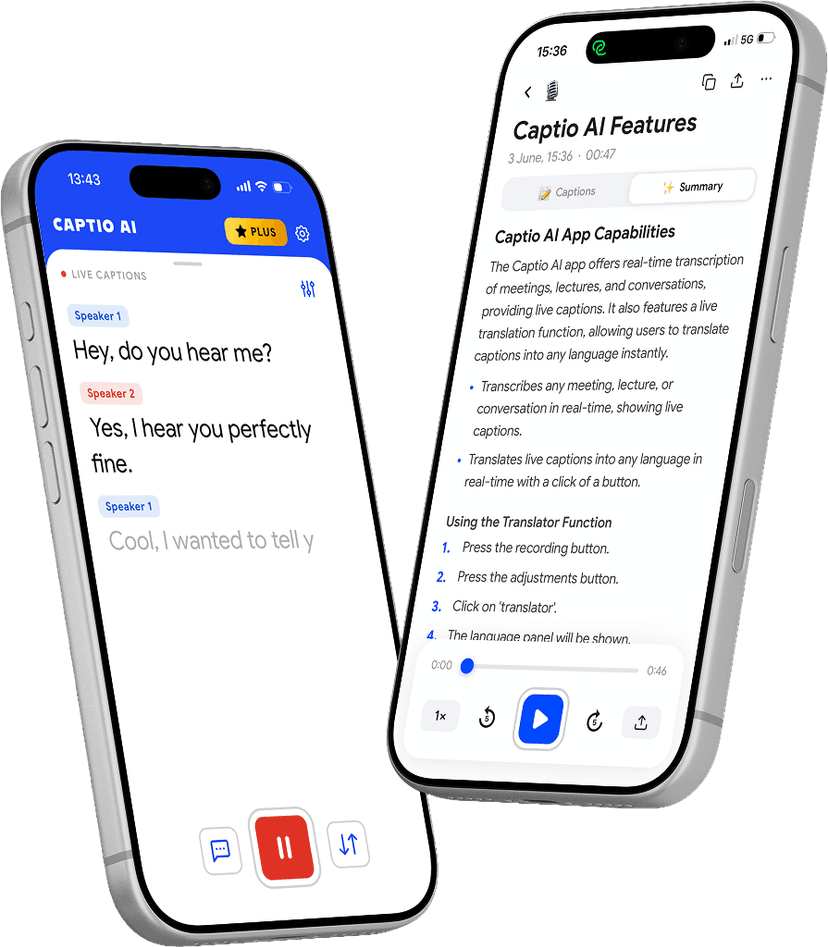
Everything you need to follow Norwegian doctor appointments
Four tools built for deaf and hard of hearing Norwegian speakers.
Follow what the doctor says in real time
- Captions appear word by word as they speak
- Handles medical terminology, drug names, and clinical language
- Place the phone on the desk — no setup needed
- Works in any consultation room, clinic, or hospital setting
When the doctor speaks another language
- Captions and translates in real time
- Follow your diagnosis in the language you understand best
- 60+ languages, no manual switching
- For foreign specialists, travel, or immigration settings
A full record of the consultation
- Record the appointment and upload it for a complete transcript
- Review instructions, drug names, and follow-up steps at home
- Share with a family member or carer if needed
- Works on any consultation recording
Key instructions extracted automatically
- Diagnosis, medication, and follow-up steps pulled from any transcript
- Organised into clear sections
- Nothing important missed or forgotten
- Works on any saved appointment recording
Download for free
Every situation covered
Designed for the real moments that matter — not just quiet controlled environments.
At a fastlegekontor (GP practice) in Oslo, Bergen, or a smaller kommune, your lege explains symptoms and treatment in Norwegian. Captio AI captions every word so you follow the full consultation.
At a specialist appointment at Oslo universitetssykehus or a regional sykehus, medical terminology arrives in Norwegian. Captio AI captions in real time so you follow every detail.
At the apotek (pharmacy), the farmasøyt explains dosage and drug interactions quickly in Norwegian. Point your phone toward them and read the instructions as they speak.
At the tannlege (dental clinic), the dentist gives instructions during treatment when lip-reading is impossible. Captio AI captions from audio alone.
In a session with a psykolog or psykiater, sensitive conversations require full comprehension. Captio AI captions the full session so you engage without gaps.
At the akuttmottak (emergency department), staff speak quickly under pressure. Open Captio AI and read their instructions in real time.
Most accurate and fastest models
word accuracy
independent benchmark, 2025
real-time captions
first word appears as you speak
Download for free
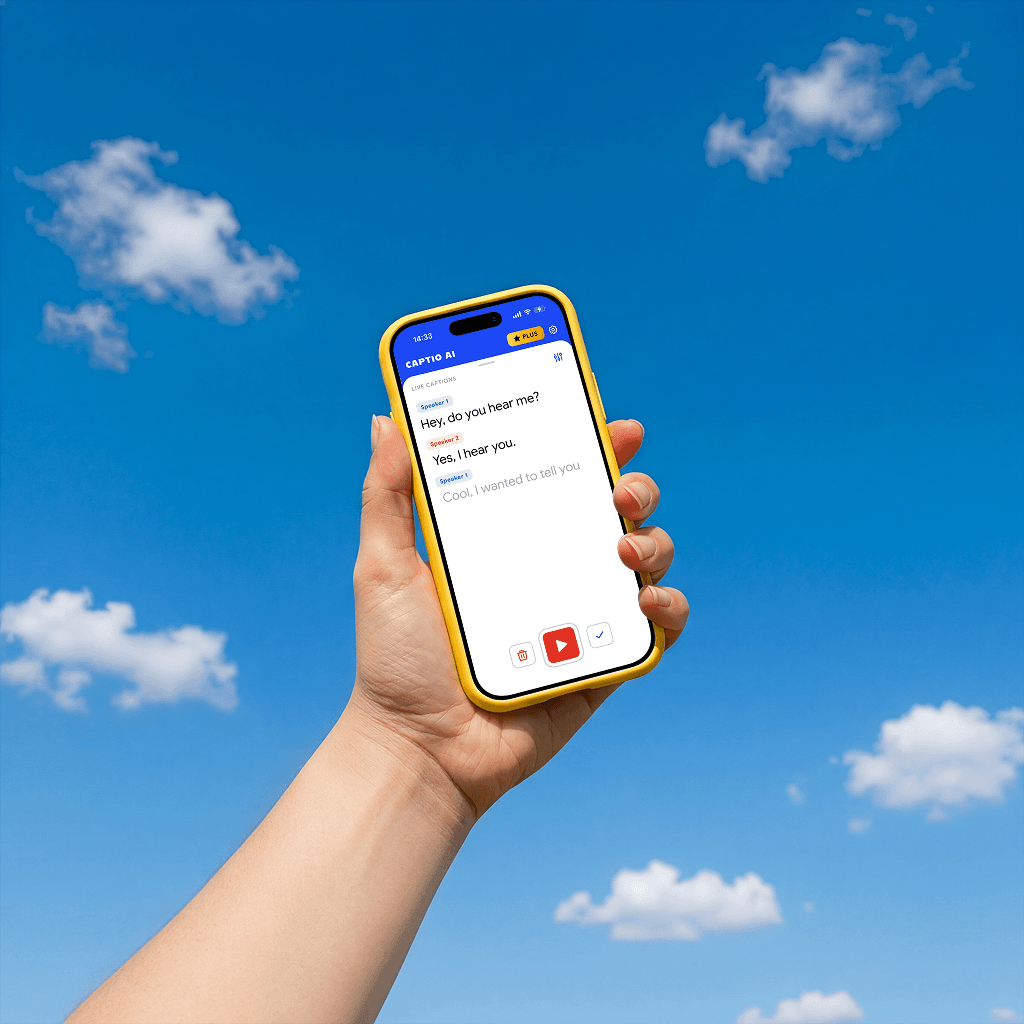
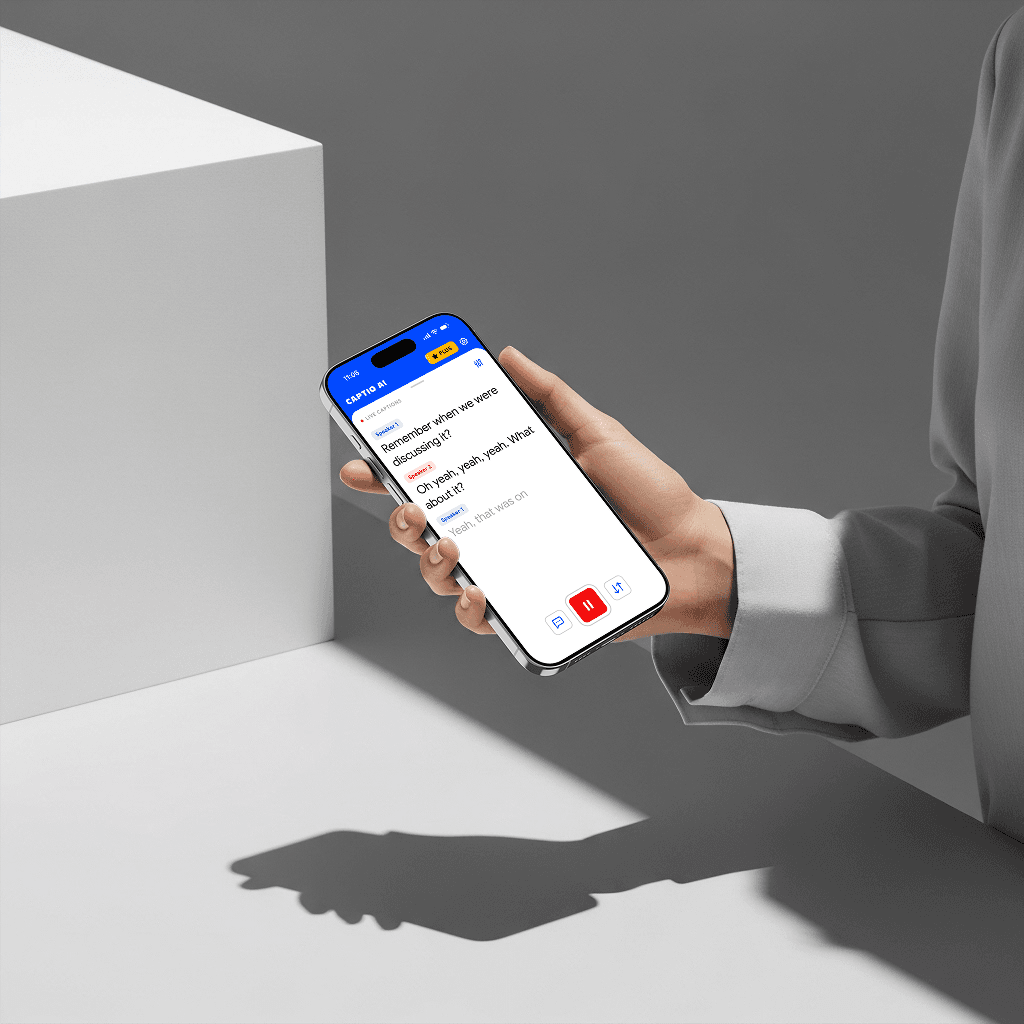
Built for the conversations where every word matters
Captions as the doctor speaks
Words appear on screen while the doctor is still talking. You read the diagnosis, drug name, or follow-up instruction at the same moment it is said — not after they have moved on.
Medical terminology handled accurately
Drug names, procedure names, clinical terms. Captio AI handles the vocabulary of a real consultation — not just everyday speech.
Review the appointment after
Record the consultation and upload it to Audio Transcription. Get a full written record of everything said — instructions, dosages, referrals — to review at home and share with a carer if needed.
Works in any clinical setting
Consultation rooms, hospital wards, A&E, dental chairs, pharmacy counters. Place the phone near the speaker and Captio AI captions whoever is talking.
Any language
For foreign-language doctors, specialists abroad, or appointments through an interpreter. Live Translator captions and translates in real time so you follow your diagnosis in the language you understand best.
100% private
Medical conversations are among the most sensitive there are. Captio AI processes audio in real time and discards it immediately. Nothing is recorded, stored, or shared.
Why Norwegian is hard to understand
Pitch accent (tonelag)
- Norwegian tonelag changes meaning but is invisible on the lips
- Norwegian uses a pitch accent system — tonelag — with two distinct tonal patterns that distinguish word meaning. 'Bønder' (farmers) and 'bønner' (beans) differ only in tonal contour. Like Swedish pitch accent, tonelag is entirely auditory — no lip shape distinguishes Tone 1 from Tone 2. For a deaf or hard of hearing patient lip-reading Norwegian, a phonemic layer that distinguishes entire word categories simply does not appear on the speaker's face.
Extreme dialectal variation
- Norwegian has one of Europe's most varied dialect landscapes
- Norwegian has an unusual linguistic situation: no single prescribed spoken standard, with both Bokmål and Nynorsk as official written forms and a vast range of spoken dialects that differ substantially in vowel quality, pitch accent realisation, and vocabulary. Bergen Norwegian, Oslo Norwegian, Trondheim Norwegian, and Northern Norwegian each produce markedly different mouth shapes for the same clinical vocabulary. A deaf patient lip-reading one Norwegian variety finds clinical staff from other regions speaking in phonological patterns they were not trained to read.
Bergen vowel distinctiveness
- Bergen and Western Norwegian vowels differ markedly from Oslo Standard
- Bergen Norwegian has retained historical vowel qualities absent in Eastern Norwegian — long high-front vowels have different lip shapes, and the pitch accent system realises differently from Oslo. Medical staff trained in Bergen or working in Western Norway produce a phonological profile that is immediately distinguishable from the Eastern Norwegian (Oslo-based) speech that most lip-reading instruction is built on in Norway.
Nynorsk register gap
- Nynorsk-speaking medical staff produce different word forms from Bokmål
- In hospitals and health centres in Western Norway and parts of the interior, some medical staff use Nynorsk as their written form and speak in Nynorsk-influenced varieties. Clinical vocabulary in Nynorsk shows different word forms from Bokmål: 'lege' vs 'lækjar', 'sjukehus' vs 'sjukehus' (same here, but many terms differ). A deaf patient prepared for Bokmål-register clinical speech will encounter Nynorsk-influenced forms that produce different lip patterns for equivalent terms.
Sámi community barriers
- Sámi patients face hearing loss at higher rates and healthcare in a second language
- Research has documented higher rates of hearing impairment among Sámi adults in northern Norway and Finland. For a Sámi person with hearing loss whose primary language is Northern Sámi, a medical appointment conducted in Norwegian creates a simultaneous language and comprehension barrier — the patient must lip-read a language that is not their home language, in a phonological system they were not trained to read.
Download for free
Hearing loss in Norway: 11,000 NSL signers, official recognition since 2022, and a persistent employment gap
Norway's deaf and hard of hearing community numbers approximately 11,000 Norwegian Sign Language (NTS/NSL) users. Norwegian Sign Language received official recognition on 1 January 2022 — a meaningful milestone following decades of advocacy. Norway has early intervention mandates and newborn hearing screening reaching 95% of infants. The constitutional principle of equality under the law extends formally to disabled communities, and deaf children in primary school are entitled to instruction in sign language where required. In comparative European terms, Norway's legal framework for deaf rights is among the more developed.
Despite this legal strength, a documented employment gap persists. Research using HUNT study data found a prevalence of disabling hearing loss of 5.9% in a large Norwegian population sample. A separate study found that adults with hearing loss in Norway had significantly higher rates of sick leave and risk of disability pension than the general population — even when controlling for age and other factors. In educational terms, traditional deaf schools no longer exist in Norway, with most deaf and hard of hearing children enrolled in mainstream schools — an integration approach that reduces sign language community exposure and can leave deaf adults with less fluent sign language skills than their counterparts in countries with dedicated deaf schools.
In healthcare settings, the 2022 NSL recognition has not yet been fully translated into guaranteed interpreter provision at clinical appointments. A deaf Norwegian attending a fastlegekontor or sykehus in a smaller municipality may still need to arrange their own interpreter support in advance — a task that imposes administrative burden and fails entirely for urgent or walk-in appointments. For the broader population of hard of hearing Norwegians who use hearing aids rather than sign language, the language itself presents the pitch accent and dialect barriers described above. Captio AI captions Norwegian in real time at any fastlegekontor or sykehus, so every patient receives their doctor's words directly — regardless of the dialect, the registration of the interpreter, or the urgency of the appointment.
Download for free
What you hear stays with you.
Gone the moment it ends
Captio AI processes your audio in real time and discards it immediately. Nothing is recorded. Nothing is kept.
Not a product
Your conversations are not something Captio AI sells, shares, or monetizes — to anyone, for any reason.
Not used to train anything
What you say in a doctor's appointment or a job interview never ends up in a training dataset. Not ours. Not anyone else's.
Private by default
Captio AI supports 60+ languages
Download for free
Frequently asked questions
Understand your diagnosis in Norwegian.
Captio AI is free to start
Download for free