

Swahili live captions and productivity tool for traveling
For deaf and hard of hearing people.
Download for free


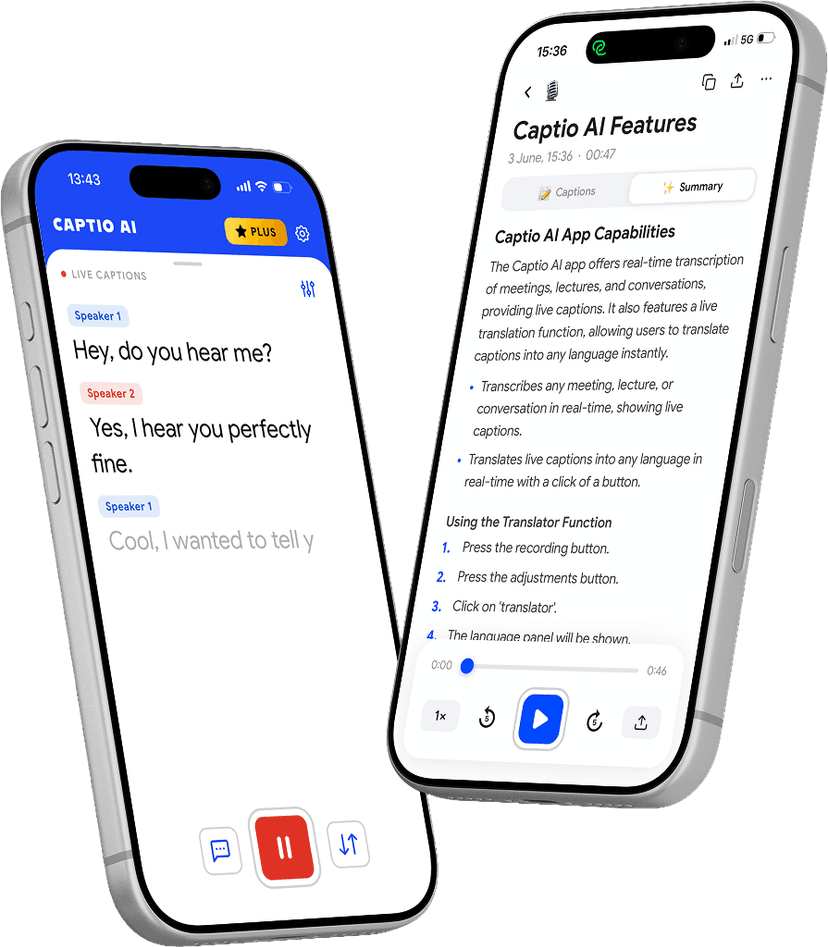
Everything you need to follow Swahili traveling
Four tools built for deaf and hard of hearing Swahili speakers.
Captions any spoken exchange, anywhere
- Airport staff, hotel receptionists, taxi drivers
- Real time, word by word, as they speak
- Works through travel noise and accents
- No setup — open the app and point it
No language barrier, anywhere in the world
- They speak their language — you read in yours
- 60+ languages, no manual switching
- For customs, hotels, restaurants, and local transport
- Translates in real time as they speak
Transcribe any recorded content
- Record a tour guide, a briefing, an important exchange
- Upload and get the full transcript to review
- Any language, any format
- Useful for travel information you want in writing
Key travel information extracted
- Instructions, directions, and key details from any transcript
- Organised into clear sections
- Useful after complex hotel check-ins or guided briefings
- Works on any saved recording
Download for free
Every situation covered
Designed for the real moments that matter — not just quiet controlled environments.
At Jomo Kenyatta International in Nairobi, Julius Nyerere in Dar es Salaam, or Abeid Amani Karume in Zanzibar, announcements come in Swahili and English. Captio AI captions both so you never miss a gate change or boarding call.
Kenya's Standard Gauge Railway and Tanzania's intercity trains announce stations in Swahili. Captio AI captions ticket counter conversations and platform PA in real time.
A hotel receptionist in Nairobi or Stone Town explaining check-in details and local recommendations in Swahili. Captio AI captions every word on the reception desk.
Asking for directions in Nairobi's CBD or Mombasa's Old Town lanes. Fast Swahili with local colouring — Captio AI captions in real time so you understand the first time.
Kenyan and Tanzanian immigration officers at international borders speak in Swahili and English. Captio AI captions every question so you respond accurately.
A guide at Maasai Mara, the Serengeti, or Zanzibar's spice farms delivering Swahili commentary. Captio AI captions so you follow the full story.
Most accurate and fastest models
word accuracy
independent benchmark, 2025
real-time captions
first word appears as you speak
Download for free
Built for a world that announces everything by sound
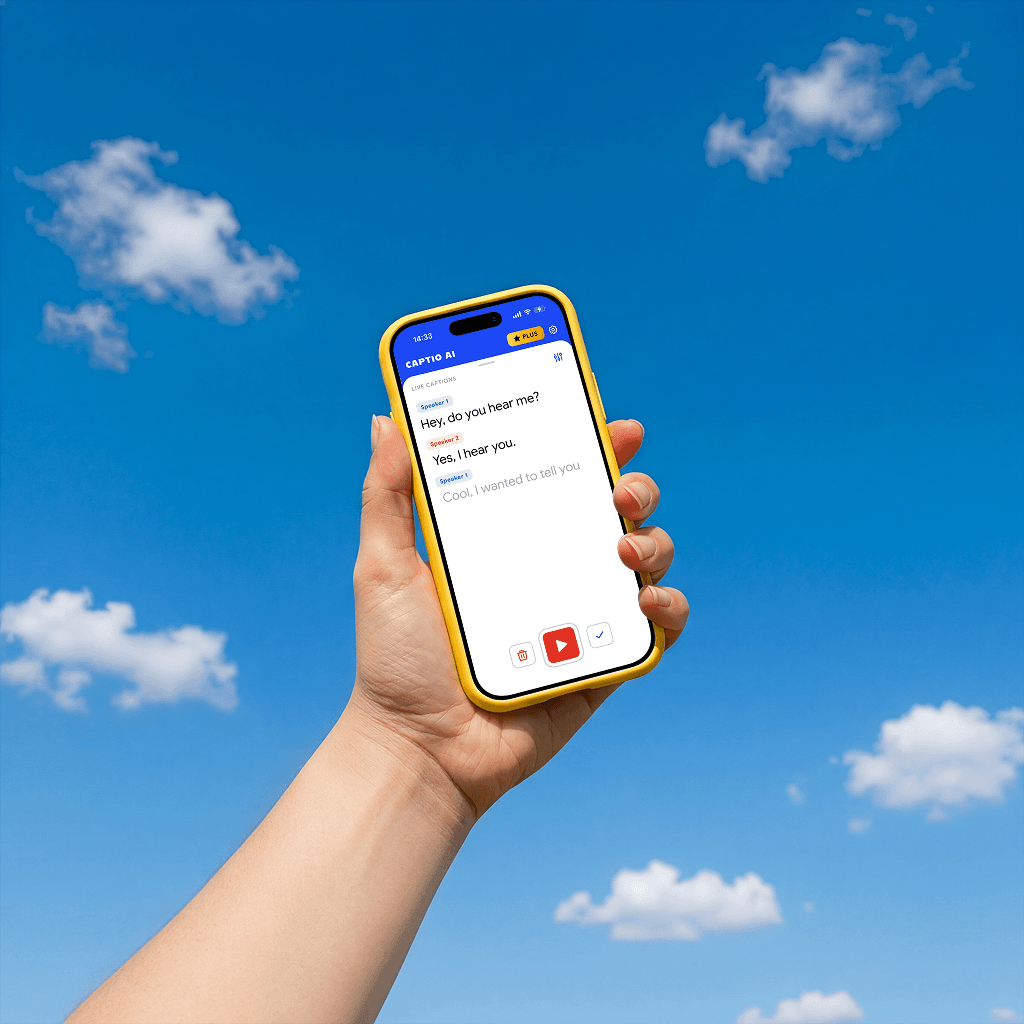
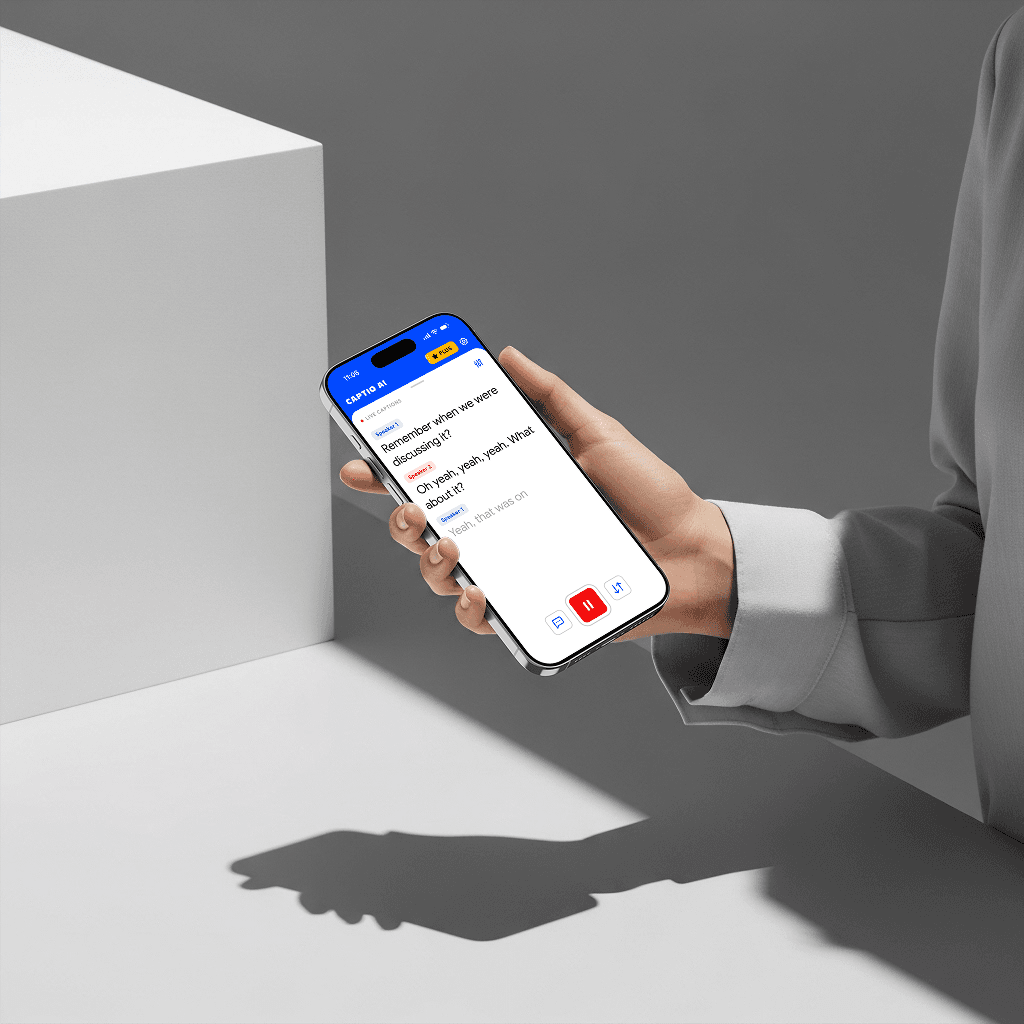
Captions any spoken exchange in real time
Airport staff, hotel receptionists, taxi drivers, tour guides. Hold the phone toward whoever is speaking and read the captions — in any setting, in any country.
60+ languages — no language barrier
Live Translator captions and translates in real time. They speak their language — you read in yours. For every country, every language, no manual setup between interactions.
Works anywhere with a data connection
Wi-Fi or mobile data. A local SIM or roaming plan keeps Captio AI running in any country — airports, hotels, rural areas, and everywhere in between.
Handles travel environments
Noisy airports, busy stations, echoing hotel lobbies. Captio AI is built for real environments — not quiet controlled rooms. It captions through the ambient noise of travel.
Discreet in any public setting
Hold the phone or place it near the speaker. Captio AI runs quietly and draws no attention — useful in customs, immigration, and any formal travel interaction where discretion matters.
Private by default
Travel conversations — customs declarations, hotel bookings, personal exchanges — are never stored or shared. Audio is processed in real time and discarded immediately.
Why Swahili is hard to understand
Prenasalized stops
- Two-segment consonants that compress at speed
- Swahili has a series of prenasalized stops — mb, nd, ng, nj, ng', mv — where a nasal release immediately precedes the stop. In fast natural speech, especially at a busy Nairobi bus terminal or an airport counter, this two-part articulation compresses into a single rapid gesture. A deaf traveler watching the lips sees a brief, ambiguous movement where two phonological events have occurred.
Coastal vs. urban Swahili
- Mombasa Swahili vs. Nairobi Swahili — very different registers
- Standard Swahili (Kiswahili sanifu) is the formal register of broadcasts, official announcements, and signage. Nairobi Sheng — an urban Swahili-English-Kikuyu blend — dominates everyday speech in Kenya's capital. Mombasa Swahili (the original coastal dialect) has distinct phonology. A deaf traveler at Moi International in Mombasa and JKIA in Nairobi faces two very different spoken Swahili registers on the same trip.
Swahili-English code-switching
- English enters mid-sentence without warning
- In Kenya and Tanzania, English and Swahili blend constantly in everyday speech — at airport desks, hotel receptions, and immigration counters. A sentence can switch language mid-way: 'unaweza ku-check in sasa' (you can check in now). A deaf traveler must lip-read across two phonological systems without any visual signal that the switch has occurred.
Implosive consonants
- Ingressive sounds invisible at the lip level
- Swahili retains implosive consonants in some dialects — sounds produced with an ingressive airstream. These consonants produce almost no visible lip or facial movement compared to their non-implosive counterparts. For a deaf traveler in Zanzibar's old town or along the Kenyan coast, implosive variants in Coastal Swahili add a layer of phonemic contrast that cannot be read from a speaker's face.
Fast colloquial pace
- Everyday Swahili in busy travel settings
- At busy JKIA in Nairobi, Julius Nyerere International in Dar es Salaam, or the SGR ticket counters in Mombasa, staff speak at the pace of a crowded workplace. Swahili vowels remain relatively open, but at speed the syllable boundaries a deaf traveler uses to segment words compress into a continuous stream that makes word-by-word reading nearly impossible.
Download for free
Hearing loss and travel accessibility in Kenya and East Africa
Kenya's 2019 National Population Census recorded 153,381 deaf people aged above five years — with the overwhelming majority (129,518) living in rural areas where audiological services and educational support are scarce. Survey data from Kenya suggests that between 5% and 8% of the population have some degree of hearing impairment, a figure that projects to over 3.5 million people by 2030. Research on the prevalence and causes of hearing impairment across sub-Saharan Africa, published in Tropical Medicine and International Health, estimated disabling hearing loss at 4.55% across all ages in the region — one of the highest regional burdens globally.
Kenya's 2010 Constitution recognised Kenyan Sign Language (KSL) as a language — a significant legal milestone — but on-the-ground implementation in transport and public service settings remains limited. At JKIA in Nairobi, Kenya's busiest international gateway, PA announcements are delivered in Swahili and English by audio only, with no standardised real-time captioning for deaf and hard of hearing passengers. Tanzania's Julius Nyerere International Airport and the regional airport network across East Africa operate under similar conditions. For a deaf traveler navigating the East African travel corridor, the gap between legal recognition and practical transport accessibility is significant.
Captio AI captions Swahili speech in real time — whether a JKIA gate announcement, an SGR ticket counter in Mombasa, or an immigration officer at the Tanzanian border — so a deaf traveler across East Africa follows every instruction and exchange without depending on audio infrastructure built without them in mind.
Download for free
What you hear stays with you.
Gone the moment it ends
Captio AI processes your audio in real time and discards it immediately. Nothing is recorded. Nothing is kept.
Not a product
Your conversations are not something Captio AI sells, shares, or monetizes — to anyone, for any reason.
Not used to train anything
What you say in a doctor's appointment or a job interview never ends up in a training dataset. Not ours. Not anyone else's.

Private by default
Captio AI supports 60+ languages
Download for free
Frequently asked questions
Navigate confidently in Swahili.
Captio AI is free to start
Download for free