

Afrikaans live captions and productivity tool for TV & media
For deaf and hard of hearing people.
Download for free


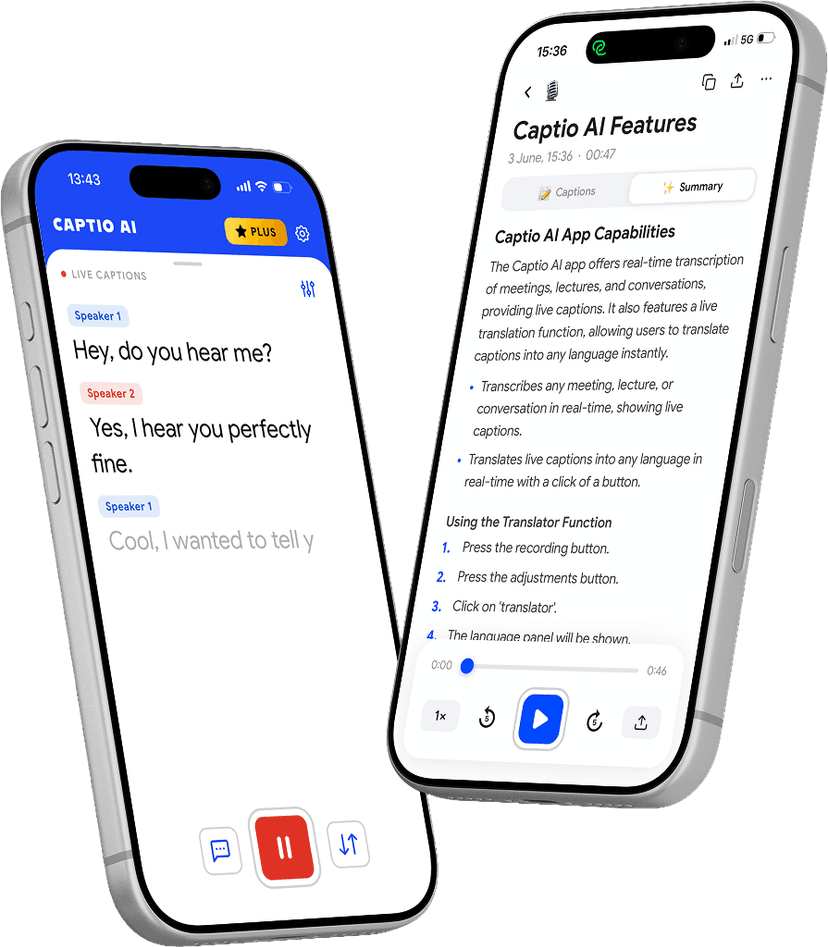
Everything you need to follow Afrikaans TV & media
Four tools built for deaf and hard of hearing Afrikaans speakers.
Captions anything playing in real time
- Point the phone toward the speaker and read along
- Works on any TV, laptop, tablet, or phone
- No subtitle file required — captions from the audio directly
- Faster than pre-generated subtitles for live content
Watch content in any language
- Foreign films, foreign news, foreign YouTube — all translated in real time
- They speak their language — you read in yours
- 60+ languages, no setup
- Works as content plays
Full transcript of any recording
- Upload a recording and get the complete written transcript
- For lectures, podcasts, talks, or any long-form content
- Searchable and copyable
- Any language, any format
Key points from any content
- Main ideas and takeaways from any transcript
- Useful for news, documentaries, and long-form content
- Organised into clear sections
- Works on any saved recording
Download for free
Every situation covered
Designed for the real moments that matter — not just quiet controlled environments.
SABC and kykNET run live news that pre-generated captions cannot keep up with. Point Captio AI at your TV and read the Afrikaans as it is spoken, not several seconds behind the anchor.
DStv, Showmax, and Netflix vary in subtitle quality and availability. Captio AI works as a consistent fallback for any Afrikaans show or film that ships with wrong, delayed, or missing captions.
YouTube auto-captions for Afrikaans are often inaccurate and most social video has none. Point Captio AI at your phone and read accurate Afrikaans captions for any clip.
A foreign film, a foreign documentary, a non-Afrikaans channel. Live Translator captions and translates in real time so anything becomes watchable in Afrikaans as it plays.
Not every cinema showing is captioned. Hold Captio AI near the audio and read real-time Afrikaans captions of the dialogue discreetly from your seat.
Most Afrikaans podcasts have no transcript. Hold Captio AI near the audio or upload a recording, and read the whole episode in writing.
Most accurate and fastest models
word accuracy
independent benchmark, 2025
real-time captions
first word appears as you speak
Download for free
Built for the content that subtitles fail
Captions any content in real time
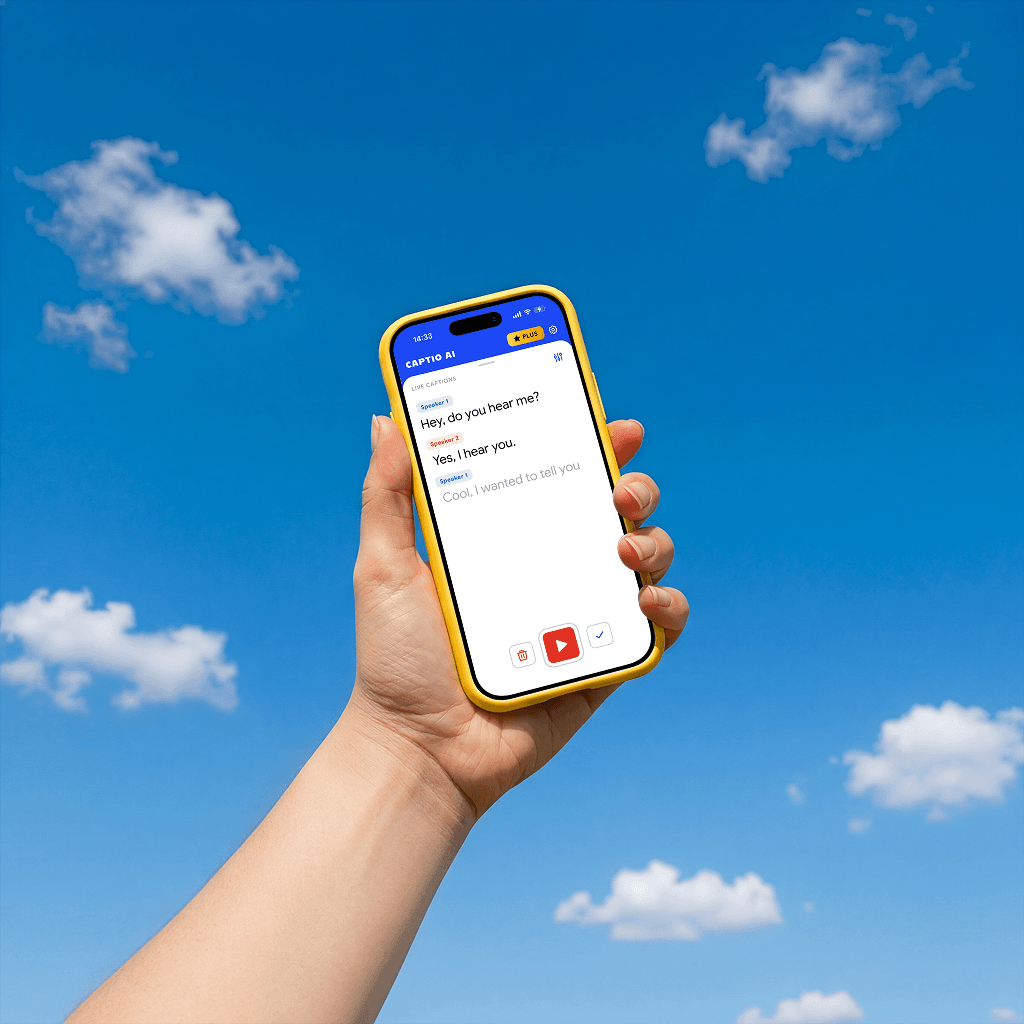
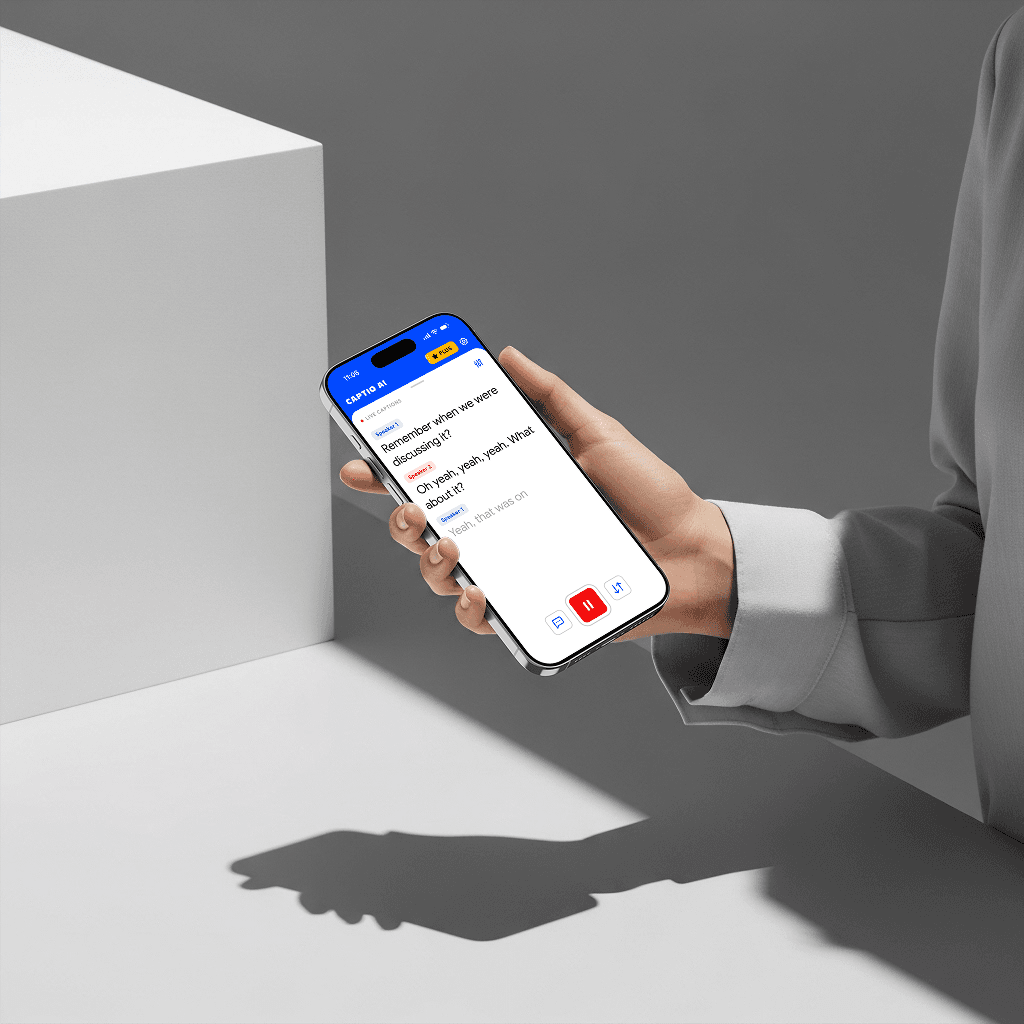
Point the phone toward any speaker — TV, laptop, tablet, cinema screen. Captio AI captions whatever is playing, regardless of whether that platform provides subtitles.
Faster than built-in subtitles for live content
Pre-generated subtitles lag behind live TV by several seconds. Captio AI captions in real time — so you read what is being said as it is being said.
Works on any screen or device
No integration required. Point the phone toward the audio source — the same approach works for a large TV, a laptop screen, a cinema, or a phone held at arm's length.
Any language, translated in real time
For foreign-language content, switch to Live Translator. It translates as content plays — so a French film, a German documentary, or a Japanese series all become watchable.
No subtitle file needed
Captio AI captions from the audio directly. No subtitle file, no platform support, no creator requirement. If audio plays, Captio AI can caption it.
More accurate than auto-generated captions
The industry average for AI-generated subtitles is a 10–15% word error rate — roughly 1 in 10 words wrong (3Play Media). Captio AI is built for accuracy in real-world audio conditions.
Why Afrikaans is hard to understand
Guttural g and ch
- Sounds scraped at the back of the throat
- Afrikaans is known for its guttural 'g' and 'ch', voiceless fricatives made at the back of the throat with no lip cue. On a TV drama or a news read a deaf viewer sees nothing of these sounds, which appear constantly in Afrikaans and separate one word from another.
Large vowel and diphthong system
- Rounded vowels and diphthongs that look alike
- Afrikaans has a large set of vowels and diphthongs, including rounded vowels and the crisp, clipped qualities that make the language sound fast. Many sit close together on the lips, so on screen a deaf viewer cannot tell apart the vowel that changes a word.
Cape and Namibian varieties
- Kaapse Afrikaans and standard differ on screen
- Afrikaans content spans standard Afrikaans, the English-mixing Kaapse Afrikaans of the Western Cape with its softer g, and Namibian Afrikaans coloured by German and local languages. A deaf viewer calibrated to one meets different lip shapes from one show or character to the next.
Nasalization
- Vowels nasalized before certain consonants
- Afrikaans nasalizes vowels before certain consonants, a change made at the soft palate with little visible cue. A deaf viewer watching a face misses a nasal quality that shifts the word, and the clipped, quick vowels give little to hold onto.
Afrikaans–English code-switching
- English dropped into Afrikaans content
- In multilingual South Africa, Afrikaans and English are mixed constantly — especially in the Cape. A deaf viewer meets English phonology on the key word, then returns to Afrikaans, with no visual warning and no lip to read after a cut.
Download for free
South Africa subtitles for many languages — but rarely captions for deaf viewers
Between four and five million people in South Africa live with a hearing impairment, and hearing impairment is the third most-reported disability in the country. The SABC is required to broadcast in all official languages and to cater for viewers with hearing disabilities, and subtitling is central to how it manages a country with eleven official languages — cheaper than dubbing, and a way to protect language rights across regions.
But subtitling for multilingual audiences is not the same as captioning for deaf viewers, which marks who is speaking and describes the sounds. Dedicated deaf subtitling is sparse; Afrikaans competes with ten other official languages for limited airtime and captioning resources; live news carries no reliable real-time captions; and streaming and social content vary widely. The guttural g and clipped vowels that make Afrikaans hard to lip-read leave a deaf viewer stranded wherever a caption is missing.
Captio AI does not depend on the broadcaster or the platform. Point the phone at any screen — a live SABC bulletin, a kykNET drama, a YouTube clip — and read Afrikaans captions in real time from the audio, whether or not that content was ever captioned.
Download for free
What you hear stays with you.
Gone the moment it ends
Captio AI processes your audio in real time and discards it immediately. Nothing is recorded. Nothing is kept.
Not a product
Your conversations are not something Captio AI sells, shares, or monetizes — to anyone, for any reason.
Not used to train anything
What you say in a doctor's appointment or a job interview never ends up in a training dataset. Not ours. Not anyone else's.

Private by default
Captio AI supports 60+ languages
Download for free
Frequently asked questions
Watch anything in Afrikaans.
Captio AI is free to start
Download for free